Gold Prices: The tension in the Middle East has only taken new twists and turns over the past 1-year. From Israel's all-out war against Hamas to the exchange of direct ballistic airstrikes with Iran and ground invasion in Lebanon, the latest nerve-wracking situation for the oil-hub Middle East would be Syrian rebels overthrowing over 2-decades of the regime of Bashar al-Assad.
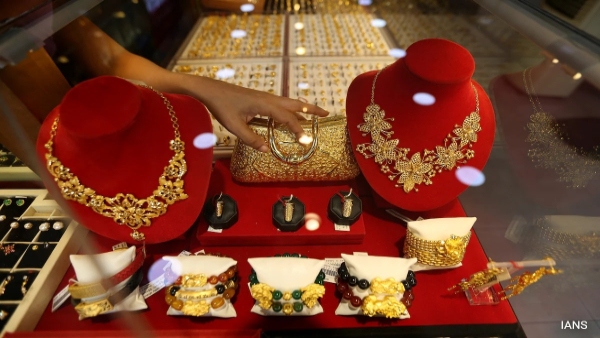
The latest development has intensified in Syria with alliances and rivalries in the region. Additionally, Israel has bombed the majority of military bases in Syria, with the presence of US military personnel rising in the region. It's not just Israel, and the US, even countries like Russia, Iran, Turkey and Iraq are also involved in the regional puzzle in Syria. Following the high geopolitical tensions in the Middle East, gold prices in the souk markets of countries like Oman, Kuwait, UAE, Qatar and Saudi Arabia have skyrocketed, even outperforming gold prices in India in the past 1-year, How will the tensions in Syria impact gold? Let's find out!
Gold Prices In India
Gold prices in India are currently at Rs 77,350 for 24K of 10 grams, which is higher by 21.8% in a year. Gold prices were merely at Rs 63,490 per 10 grams last year on December 25.
Gold Prices In Middle East
However, gold prices in the Middle East have outperformed gold prices in India. 24K of 10 grams of gold in Kuwait has surged by nearly 26%, while gold prices in Qatar, Oman, and Saudi Arabia have soared by 26% to 27%. A massive surge has been seen in 27.23%.
Notably, in Indian rupees, gold prices are cheaper in these Middle East countries than compared to India.
24K gold prices in Kuwait are at Rs 72,380 per 10 grams, while the price is at Rs 73,430 in Oman. Further, 24K/10 grams is at Rs 74,060 in Qatar, at Rs 73,260 in Saudi Arabia, and at Rs 73,380 in UAE.
Syria Civil War Explained:
The Syrian civil war is an ongoing multi-sided conflict in Syria involving various state-sponsored and non-state actors. In March 2011, popular discontent with the rule of Bashar al-Assad triggered large-scale protests and pro-democracy rallies across Syria, as part of the wider Arab Spring protests in the region, as per Wikipedia.
However, in November 2024, heavy fighting renewed with a major rebel offensive in the northwest led by Tahrir al-Sham and supported by allied groups in the Turkish-backed Syrian National Army, which led to the seizure of major regions of Syria such as Aleppo, Hama, and Homs. By the end of December 8th, 2024 the rebels took over Syria's capital, Damascus. Due to this, the Assad regime collapsed, with al-Assad fleeing to Moscow. On the same day, Israel launched an invasion of Syria's Quneitra Governorate, aiming to seize the UN buffer zone in the Golan Heights. While the Syrian National Army (SNA) and Syrian Democratic Forces (SDF) continue to be in conflict.
Currently, the situation in Syria is highly sensitive and volatile, with different armed groups and opposition forces internally and externally, directly involved in the regional conflict.
How Tension In Syria Will Impact Gold Prices? Also, a host of other factors will play major role in sentiment for gold in 2025.
Prithviraj Kothari, Managing Director of RiddiSiddhi Bullions Limited (RSBL) said, gold prices have been greatly impacted by the recent escalation in the Middle East, especially with regard to Syrian rebels and broader regional conflicts. Geopolitical unrest frequently helps gold since it is a safe-haven investment. After Syrian revolutionaries took control of the capital, Damascus, President Bashar al-Assad and his family fled to Russia in quest of safety.
Going ahead, he added, Currency fluctuations, interest rate regimes, and worldwide economic conditions are just a few of the many variables that affect gold prices. The general mood of the market and how these other elements interact will determine how the Syrian war affects gold prices. Syria's condition is extremely unstable and changing. The way the dispute develops and how it impacts larger international markets will determine the real effect on gold prices.
Meanwhile, the World Gold Council lists a host of factors that could prompt investors to look for gold as an asset. WGC's 2025 outlook report said, Trump starts his second term in late January but the US stock market is already banking on a pro-business agenda with a near 7% increase since early November. A more business-friendly fiscal policy combined with an America-first agenda is likely to improve sentiment among domestic investors and consumers. This will likely favour risk-on trades in the first few months of the year.
Furthermore, WGC's note said, the question, however, is whether these policies will also result in inflationary pressures and disruptions to supply chains. In addition, concerns about European sovereign debt are once again mounting, not to mention continued geopolitical instability, particularly in light of the events in South Korea and Syria in early December.
In all of this, WGC's note said, this could prompt investors to look for hedges, such as gold, to counter risk.
Data from WGC pointed out that spot gold increased by more than 28% y-t-d in US dollars, trading 22% higher on average this year than during 2023; its performance across currencies was equally strong. Gold reached 40 new record highs y-t-d and total gold demand in the third quarter surpassed US$100 billion for the first time.
Lastly, WGC suggests that, if the economy were to perform according to consensus in 2025, gold may continue to trade in a similar range to that seen in the last part of the year, with the potential for some upside.
For investment related articles, business news and mutual fund advise



 Click it and Unblock the Notifications





 Sign in with Google