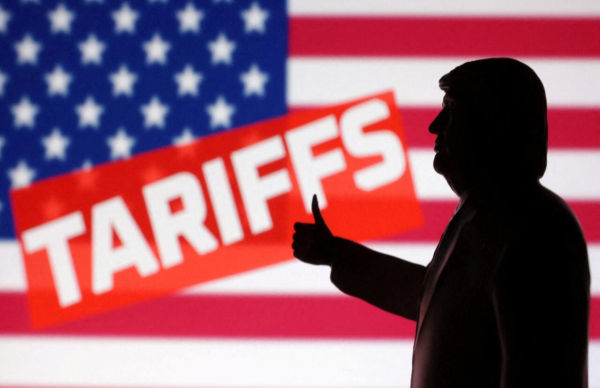
The US President Donald Trump is back in the limelight with new tariffs list which will come into effect from October 1, 2025. This time, his tariffs drama extended towards pharma products, home appliances and heavy trucks. The new biggest tariff hike is of 100% on pharmaceuticals. Will the new rates impact India?
100% Tariffs On Pharma Products:
Through his Truth Social account, Trump announced to impose 100% tariff on any branded or patented Pharmaceutical Product. This will come into effect from October 1st, 2025.
However, Trump gave the option to escape the 100% tariff as well. He said, "unless a Company IS BUILDING their Pharmaceutical Manufacturing Plant in America." He emphasized that 'Is Building' be mean as 'breaking ground' and or 'under construction'.
Hence, he said, there will be no tariffs on those pharmaceuticals if they have started construction work of their facility in America.
Impact On India: As per Dr. VK Vijayakumar, Chief Investment Strategist, Geojit Investments Limited, President Trump's tantrums with tariffs are resuming with new tariff imposts on patented and branded drugs. India being an exporter of generic drugs is unlikely to be impacted by this. But perhaps the president's next target can be the generic drugs.
Kitchen Cabinets, Bathroom Tiles & Furniture:
The 47th US President further slapped a 50% tarif on all Kitchen Cabinets, Bathroom Vanities, and associated products, starting October 1st, 2025.
Additionally, he announced a 30% tariff on Upholstered Furniture.
Explaining the reason, Trump said, "The reason for this is the large scale "FLOODING" of these products into the United States by other outside Countries. It is a very unfair practice, but we must protect, for National Security and other reasons, our Manufacturing process."
Heavy Trucks:
Trump has slapped a 25% tariff on all "Heavy (Big!) Trucks" made in other parts of the World. His reasoned that the country's great heavy truck manufacturers are facing unfair outside competition.
"Our Great Large Truck Company Manufacturers, such as Peterbilt, Kenworth, Freightliner, Mack Trucks, and others, will be protected from the onslaught of outside interruptions. We need our Truckers to be financially healthy and strong, for many reasons, but above all else, for National Security purposes!," he said.
Impact On India: As per Vijayakumar, Trump is now moving from country-specific tariffs to product-specific tariffs. Higher tariffs on trucks, upholstered furniture etc. indicates that the Trump administration's weaponisation of tariffs may continue till US inflation spikes forcing a rethink of this policy.
In his second presidency, Trump has enacted a series of steep tariffs affecting nearly all goods imported into the country and globally. From January to April 2025, the average applied US tariff rate climbed from 2.5% to an estimated 27%-which is highest level in over a century. Further, after changes and negotiations, the rate was estimated at 17.4% as of September 2025.By July 2025, tariffs represented 5% of federal revenue compared to 2% historically, as per Wikipedia.
Three ways to think about Trump's tariffs
As per Atlantic Council, here are three possible reasons for steep hike in tariffs by Trump:
1. Negotiation tool: The administration sees tariffs as a way to put pressure on trade partners during negotiations, as well as a potential bargaining chip. Used in this way, tariff rates can increase US leverage and result in new trade agreements, like the US-China Phase One trade deal signed during President Donald Trump's first term.
2. Punitive tool: Trump administration officials have stated that they would like to avoid overuse of financial sanctions as a form of coercive economic statecraft, since they believe it can incentivize countries to reduce their reliance on the US dollar. As an alternative, the Trump administration is relying more on tariffs to "punish" or "sanction," including for non-trade issues. The administration values the ability to easily escalate the tariff rate and, therefore, its punitive power.
3. Macroeconomic tool: The Trump administration also, more conventionally, wields tariffs in support of a wide range of macroeconomic goals:
- Protecting domestic industries, such as steel, from unfair trading practices and encouraging domestic manufacturing. - Decreasing US trade deficits. - Increasing revenue from duties. Of course, the "Catch-22" is that if reshoring is successful, the United States will not be able to increase revenue from import duties.
For investment related articles, business news and mutual fund advise



 Click it and Unblock the Notifications





 Sign in with Google