The World Bank has predicted global growth of 2.3% in 2025, marking it the slowest growth since 2008, aside from outright global recessions. Recession fears have escalated in global economies due to geopolitical risks and trade barriers, with many sectors expected to be impacted. However, the case of luxury brands is odd, with the rich not willing to compromise on their luxuries. The paradox is that luxury brands have the potential to resist recession, but are they really prone to global demand and supply shocks?
Recession Ahead?
There is a situation like recession, and global trade uncertainties are expected to be the root of the problem.
"Growth could turn out to be lower if trade restrictions escalate or if policy uncertainty persists, which could also result in a build-up of financial stress. Other downside risks include weaker-than-expected growth in major economies with adverse global spillovers, worsening conflicts, and extreme weather events," the World Bank's global outlook report said.
The global output is expected to see the weakest growth since 2008, outside of the Great Recession period. In the U.S., household spending may be further curtailed by weaker disposable income growth, and reduced private spending could precipitate a sharp deceleration in the world's largest economic activity or even a recession.
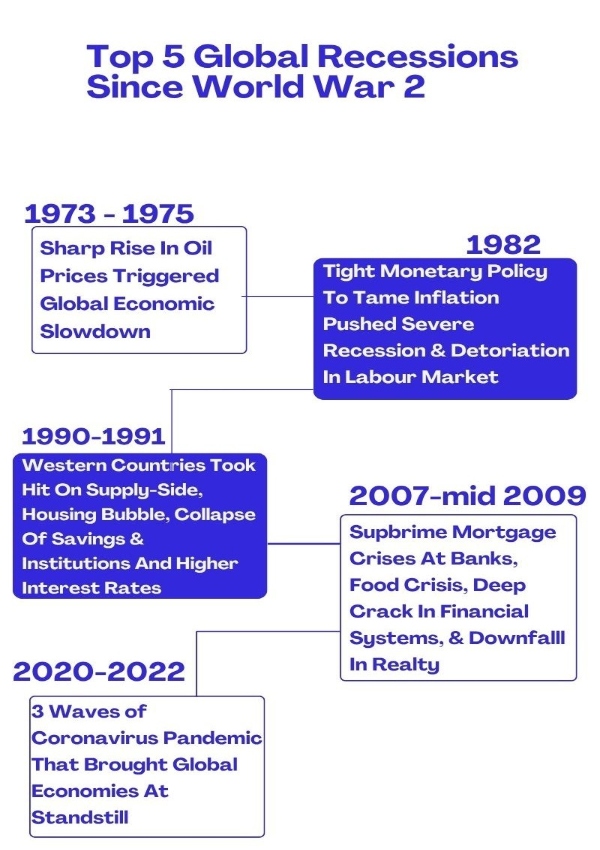
Top Global Recessions In History Key Triggers:
Amidst global recessions, various sectors are impacted, however, luxury brands do manage to duck on these factors.
Why Luxury Goods Sail Through Recession
Inelasticity, haven, exclusivity, geographical diversity, and strong marketing are some of the key reasons that set luxury goods apart, as per a research paper by Pablo Gutiérrez-Ravé Villalón, President of Luxonomy University.
1. Over a period of time, luxury products have witnessed inelastic demand, which means that despite changes in prices or consumers' incomes, their demand is not significantly impacted. The consumers of luxury goods fall under the category of 'ultra-high-net-worth individuals,' and they do not drastically alter their consumption habits irrespective of recessions or not.
2. Luxury goods are not just branded shoes, clothes or bags; they are also art, jewelry, high-end watches, and collectible cars, which are seen as tangible investments, and these mechanisms have the potential to hedge returns against the uncertain environment. During recessions, safe haven assets like gold see an increase in appetite.
3. The limited supply and inherent exclusivity of luxury products play a crucial role during recessions. Luxury brands maintain strictly controlled production and distribution strategies to preserve their exclusivity and the high perceived value of their products. During recessions, these strategies may be intensified. The perceived scarcity increases the desire and willingness of wealthy consumers to pay high prices for unique and distinctive products, as per Gutiérrez's note.
4. The majority of luxury brands have a global presence, which helps them to reap diversification benefits on a geographical basis. During recessions, if a specific region is severely impacted, luxury brands' global diversification allows them to sail as other markets may not be impacted or could be less affected.
5. Luxury brand marketing strategies are designed to appeal to the emotions and aspirations of consumers, creating a deep and personal connection with the products. During recessions, this emotional connection can be a decisive factor in maintaining customer loyalty, according to Gutiérrez's research note.
Luxury Brands Are Not Necessarily Entirely Immune!
For instance, during the 2008-09 great recession, the market of luxury goods recorded a 9% decline in its value, as per reports. Also, in 2012, the market faced the brunt of the European debt crisis of 2012, where some of them were forced to sell products at a steep discount. Even in the Covid-pandemic recession, apparel and watches witnessed a 30% decline in their sales.
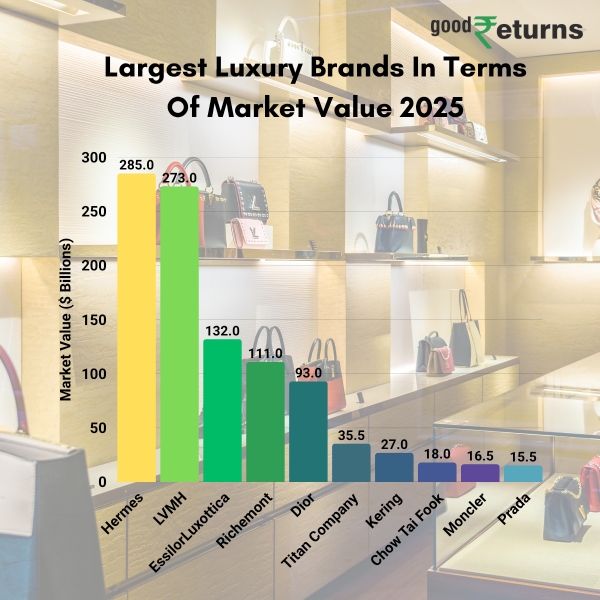
Which Luxury Brands Are Well-Placed If Recession Is Around The Corner?
"While no brand is entirely immune to economic downturns, certain luxury houses such as Hermès, Cartier, Chanel, and Rolex have historically demonstrated resilience during recessions because they operate on a fundamentally different value system than mass-market brands. They've built a brand legacy over decades rooted in scarcity, quality and cultural capital. Their customers are buying into something that holds or even grows in value," said Michelle Pereira, Founder of ElleQuinn Communications.
What sets them apart is their long-term commitment to reputation. Pereira told GoodReturns that these brands operate with precision: limiting marketing excess and carefully curating visibility. This restraint reinforces exclusivity.
For such houses, reputation is their currency. Public relations plays a central role in maintaining that stature, helping them tell the story of heritage, integrity, and distinction in credible, measured ways. She added, "In times of recession when consumer sentiment leans toward caution, these brands simply need to remain present and consistent."
How are luxury brands performing in 2025?
So far, 2025 has been a mixed bag. Pereira said, "The ultra-luxury segment is still holding steady , especially in Asia and parts of the Middle East, but we're seeing signs of softening in more accessible luxury categories, particularly in North America. If a US recession fully sets in, we'll likely see consumers becoming more selective, opting for pieces that offer meaning, longevity, and clear value."
The outlook for luxury brands over the next 24 months is cautiously optimistic, particularly for heritage-driven labels with strong brand equity. Adding she said, "however, the landscape will likely favor those that demonstrate clarity of purpose, consistency in messaging, and a commitment to long-term values."
Earlier this year, a Bain & Company report said, emerging markets represent new potential avenues of growth-including in Latin America, India, Southeast Asia, and Africa-that are collectively expected to add more than 50 million upper-middle-class luxury consumers by 2030.



 Click it and Unblock the Notifications








 Sign in with Google