Did you think that Operation Sindoor was the last action to avenge the victims of Pahalgam attack, with the peace truce between India and Pakistan? Not really! Because, in a major breakthrough, the Indian army has gunned down three terrorists that were involved in terrorizing and creating mayhem in the latest Kashmir attack. This operation is called 'Mahadev.' However, on Tuesday, July 29, defence stocks broadly traded lower due to major PSUs weak earnings and broader selling pressure in the Indian market.
What Is Operation Mahadev?
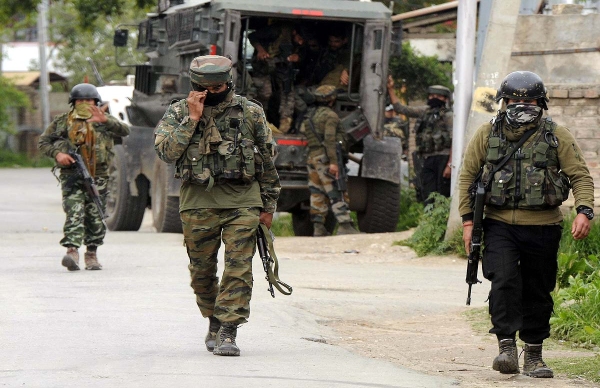
Indian security forces launched 'Operation Mahadev' with intelligence and technical surveillance that tracked the movement of terrorists in the forested Lidwas area near Harwan.
Lidwas area is situated on the outskirts of Srinagar.
On July 28th, it was confirmed that Indian Army killed three Pakistani terrorists who were involved in the Pahalgam attack.
According to reports, the encounter commenced in the early hours of July 28th, at around 11:00 am. A joint team including 24 Rashtriya Rifles and 4 Para unit acted swiftly after detecting terrorist activities in the Lidwas region. The operation which was launched by Chinar Corps, led to an intense firefight with the terrorists, which resulted in the death of three terrorists.
The three terrorists were Hashim Musa alias Suleiman, who is expected to be the mastermind of April 22th horrific terrorist act against Indian citizens and tourists in Pahalgam. The other two terrorists are Yasir and Abu Hamza. The three were part of the Pakistan-based terrorist group Lashkar-e-Taiba (LeT).
Indian army's big victory comes at a time when Operation Sindoor is being debated in the Parliament's monsoon session.
Operation Sindoor In Parliament Monsoon Session:
In the Lok Sabha on July 28, Raksha Mantri Rajnath Singh said, "The objective of Operation Sindoor was not to cross the border or capture the territory; it was to eliminate terror nurseries which Pakistan had nurtured for years, and provide justice to the innocent families who lost their loved ones in cross-border attacks."
He termed Pakistan-sponsored terrorism as not "Random Madness", but a "well-planned strategy" and a "fundamental rage", emphasising that the overall politico-military objective of Operation Sindoor was to punish Pakistan for fighting a proxy war in the form of terrorism.
Raksha Mantri termed India's response to Pakistan's attack as bold, firm and effective. "The Indian Air Force targeted Pakistan's airbases, Command and Control centres, Military infrastructures, and Air defence systems on the Western Front, and the mission was successfully accomplished. Our retaliatory attack was swift, proportionate and precise," he stated.
Rajnath Singh added that the Indian Armed Forces only targeted those who were continuously involved in trying to attack India while supporting terrorists. The objective was never to wage war but to compel the adversary to bow down through demonstrative use of force," he said, asserting that none of soldiers suffered any casualties during the operation.
Indian Army initiated operation sindoor on May 7, 2025, in the aftermath of the Pahalgam terror attack, which claimed the lives of 26 innocent civilians showcased a calibrated, tri-services response that embodied precision, professionalism, and purpose. Operation SINDOOR was conceived as a punitive and targeted campaign to dismantle the terror infrastructure across the Line of Control and deeper inside Pakistan.
Defence Stocks On July 28:
In general terms, Operation Mahadev is a positive factor to drive defence stocks. However, currently, traders are concerned over weak performance of mega defence companies in Q1FY26. The broader market sentiment is also bearish which contributes to the downside in aerospace and defence stocks.
At the time of writing, Bharat Dynamics, Hindustan Aeronautics, and Bharat Electronics plunged by nearly 2% each. GRSE shares were down by 3%. However, Mazagon Dock shares dropped by nearly 5%, while Paras Defence & Space stock plunged nearly 6% and Cochin Shipyard dipped by nearly 2%.
What To Expect In Defence Sector?
According to Choice Institutional Equities report, India's defence sector continues to operate within a strong structural upcycle, propelled by increased capital allocation, accelerating indigenization, and growing global trust in India as a strategic defence partner. For Q1FY26, we expect companies across the value chain from DPSUs like HAL, BEL, and BDL to agile, private players to post healthy revenue growth, largely in the mid to high teens. Margins are expected to remain stable or expand slightly YoY, driven by operating leverage and a favorable product mix.
Further, the brokerage's note added, the sector's outlook is further supported by the record FY26 capital outlay of INR 1.72 Trillion (up 9% YoY), with 75% earmarked for domestic procurement. The MoD is reportedly targeting acquisitions worth INR 2 Trillion, alongside recent emergency procurement approvals for high-priority systems such as loitering munitions, naval radars, and EW suites. These developments benefit both established and emerging players, including BEL, BDL, Astra Microwave, Apollo Micro Systems, and Data Patterns. On the global front, India's defence exports surged to INR 21,083 crore in FY25 (a 32% YoY increase).



 Click it and Unblock the Notifications







 Sign in with Google