Largest search engine, Google, has put a special doodle of the popular South Indian breakfast Idli. At this point, it is safe to call Idli as among the most favorite dishes of Indians, irrespective of region. Google said its celebrating Idli on October 11.
Why Google Has Put Special Idli Doodle?
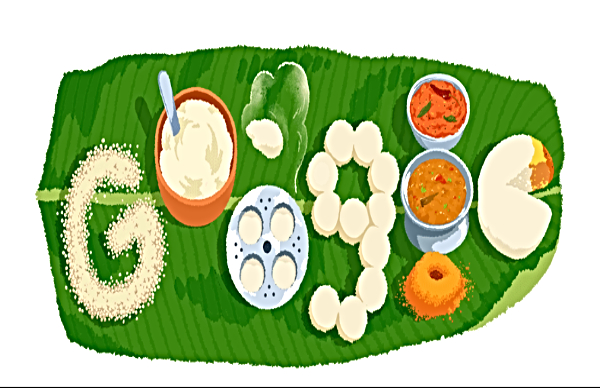
Google is celebrating Idli on October 11. It said, "Today's Doodle celebrates idli, a savoury, steamed South Indian cake made from a fermented batter of rice and urad dal."
The doodle's key theme is 'Food and Drink'.
The image of the Doodle consists of Google's name but in the theme of Idli's, such as its popular coconut chutneys, sambars and steamed idlis.
On the Google page, the doodle is live and shows the process of idli-making. The G of Google is showcasing the batter of idli, which flies off to the second O in Google and gets steamed up, which then joins the letter G, which is made of a series of small steamed IDLIs. The first O in Google refers to the popular coconut chutney, while the L letter holds all types of sambars and lastly, E is formed of one big idli with a bite. The doodle is cute, awestriking and definitely delicious-looking.
The Significance Of Idli:
Idli or idly is a type of savoury rice cake, originating from South India, popular as a breakfast food in India and in Sri Lanka. The cakes are made by steaming a batter consisting of fermented de-husked black lentils and rice. The fermentation process breaks down the starches so that they are more readily metabolised by the body. Idli has several variations, including rava idli, which is made from semolina. Regional variants include sanna of Konkan, as per Wikipedia.
Origin of Idli?
There are many opinions and findings towards the orgin of Idli. According to Naadbramha website, several classical Indian writings indicate a precursor of the existing idli. The Kannada language work Vaddaradhane by Shivakotiacharya describes "Iddalige," which is made exclusively from a black gram batter.
Meanwhile, the preparation of this dish is described by Chavundaraya II as soaking black grams in buttermilk, grinding them to a fine pulp, and combining them with clear curd water and spices (Lokopakara, circa 1025 CE).
Additionally, the website explained that Someshwara III, a Western Chalukya ruler and scholar who ruled in what is now Karnataka, provided an idli recipe in his book, Manasollasa (1130 CE). Meanwhile, according to K.T. Achaya, the modern idli recipe may have come from Indonesia, which has a rich history of fermented foods.
Lastly, the website also highlighted that Gujarati historians claim that between the 10th and 12th centuries, textile traders from Saurashtra brought idli to South India. Even a mixture of rice and black gram that was crushed together and afterward steamed to create cakes is said to have originated in Gujarat.
For investment related articles, business news and mutual fund advise



 Click it and Unblock the Notifications





 Sign in with Google