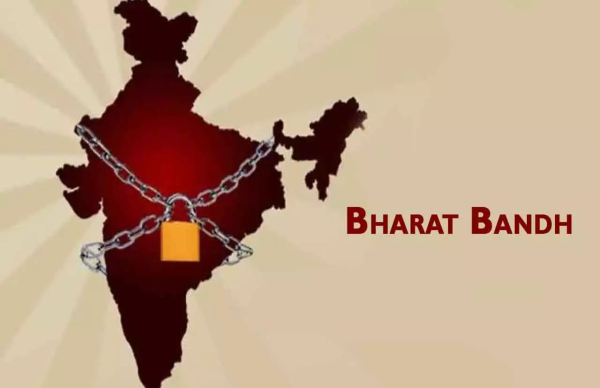
The Bharat Bandh, which was scheduled to take place on October 3rd, is now postponed due to festivals that were overlapping on the day. The All India Muslim Personal Law Board (AIMPLB) decided on Wednesday. The board had called out for a nationwide protest for the Waqf Amendment Act, 2025.
Bharat Bandh Postponed:
As per The Hindu report, the AIMPLB said the bandh has been deferred as religious festivals of other communities are set to take place in several States on the same date. The Board clarified that while the bandh has been postponed, its protest movement against the Waqf Amendment Act would not cease. Other planned programmes will be held as scheduled. The new dates for the "Bharat Bandh" will be announced soon, the AIMPLB added.
Impact On Schools, Banks, Services:
Earlier, when the protest was scheduled on October 3rd, that time as well there were no official statements made regarding holidays for schools, public institutions, banks, or offices.
Since the strike postponed on October 3rd, all services will be operational without any disruption.
What Is the Waqf Amendment Act 2025?
In conclusion, the Waqf (Amendment) Bill, 2025, introduces significant reforms aimed at enhancing the governance, transparency, and efficiency of waqf property management in India. By addressing long-standing issues such as litigation and the lack of judicial oversight, the Bill seeks to create a more structured and accountable framework.
Key changes include redefining the formation of waqf, improving the survey and registration process, empowering government oversight, ensuring inclusivity by incorporating non-Muslim members and women into waqf-related bodies. These provisions mark a crucial step toward modernizing Waqf property management in India.
The Waqf (Amendment) Bill, 2025 aims to update the Waqf Act, 1995 to fix issues in the management of Waqf properties. The proposed changes focus on:
- Overcoming the shortcomings of the previous act and enhancing the efficiency of Waqf boards
- Updating the definitions of waqf
-Improving the registration process
-Increasing the role of technology in managing Waqf records.
Meanwhile, the Mussalman Wakf (Repeal) Bill, 2025 seeks to remove the outdated Mussalman Wakf Act, 1923, which is no longer effective for modern India. The repeal will:
- Ensure uniform rules for managing Waqf properties under the Waqf Act, 1995.
- Improve transparency and accountability in Waqf management.
- Eliminate confusion and legal contradictions caused by the old law.
According to the PIB report in April, the major issues of Waqf are:
1. Irrevocability of Waqf Properties: The principle "once a waqf, always a waqf" has led to disputes, such as claims over islands in Bet Dwarka, which have been deemed perplexing by courts as well.
2. Legal Disputes & Poor Management: The Waqf Act, 1995, and its 2013 amendment have not been effective.
For investment related articles, business news and mutual fund advise



 Click it and Unblock the Notifications





 Sign in with Google