The Air India flight AI171 plane crash came as a big blow to the Indian aviation industry. The investigation continues at full scale, with the Aircraft Accident Investigation Bureau (AAIB) reportedly submitting its preliminary report on Tuesday. A meeting between top officials of India's aviation is also likely to be conducted on July 8, where the mid-June crash in Ahmedabad could be discussed as well. While authorities search for answers at one of the biggest Air India crashes in modern time, here are the repercussions an airline faces after losing a plane.
Air India Crash Preliminary Report:
As per ANI report, the AAIB submitted a preliminary report on the A1171 plane crash to the Civil Aviation ministry on July 8. The details of the investigation are yet to be made public.
According to various reports, this is an initial report summarizing evidence that was collected during the early phase of the investigation. The Aviation Ministry has been assisting AAIB since the June 12th crash. AAIB has also been carrying out various tests in the New Delhi lab.
Officials say the cause is still under review, but key indicators point toward a possible systems failure shortly after takeoff, as per Aviation A2Z report.
In other news, during a parliamentary meeting, MPs, the Public Accounts Committee (PAC), and top aviation officials raised questions about the safety of the Indian aviation industry after the Air India plane crash. They are seeking an audit report from the Bureau of Civil Aviation Security (BCAS) over the matter.
These officials also demanded clarity on the investigation of the black box of AI171 flight.
How Will the AI171 Flight Crash Impact Air India?
"The loss of life is the immediate tragedy of a plane crash, but the financial, operational, and reputational repercussions for an airline are far-reaching and often long-lasting," Prof. Amit Kumar Thakur, HoD of Aerospace Engineering, Lovely Professional University told GoodReturns.
According to Thakur, a modern commercial jet—such as a Boeing 787 or Airbus A350—can cost upwards of $250 million. However, the financial blow extends well beyond the aircraft's sticker price. Airlines make significant long-term investments in pilot training, maintenance infrastructure, scheduling systems, and route planning. An unexpected loss of an aircraft disrupts this ecosystem entirely. To maintain service, airlines often have to lease replacement jets on short notice, typically at a premium, further straining their budgets. Added to this are the costs of compensating passengers, processing refunds for cancelled flights, and meeting legal and regulatory obligations.
Further, he said, insurance provides some coverage—typically split between hull insurance (for the aircraft itself) and liability insurance (for passenger claims and third-party damages). But in the aftermath of a major crash, claims can easily run into hundreds of millions of dollars. These high-value settlements often trigger a spike in premiums not just for the affected airline but across the aviation sector, particularly if the crash reveals systemic faults.
Operationally, as per Thakur, the airline faces grounding of its fleet, disrupted schedules, and rigorous investigations by aviation authorities. Aircraft models may need re-certification, crew retraining may be mandated, and audits may become more stringent. Recovery is rarely quick-it may take months or even years to restore full operational capacity and public confidence.
"Reputation, too, takes a hit. Passenger trust is hard-won and easily lost. A single incident can lead to a noticeable drop in ticket sales, prompting airlines to rethink their crisis communication strategies and safety protocols," he said.
In his concluding remark, Thakur told us, "For large carriers, such events represent a serious setback. For smaller airlines, they can pose an existential threat. And while aircraft and capital can be replaced, the human cost remains irreparable. Every crash serves as a sobering reminder of the immense responsibility the aviation industry bears—with lives, trust, and billions at stake."
Air India-Ahmedabad Crash:
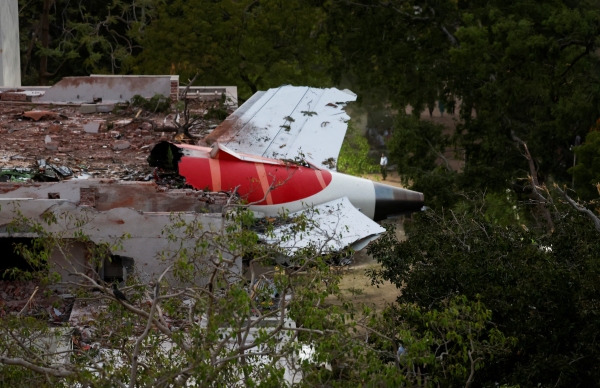
Air India's flight AI171, carrying 242 passengers and crew members, departed from Sardar Vallabhbhai Patel International Airport on June 12 at 1:39 PM local time. Tragically, the airline met its doom shortly after takeoff. Reaching 625 feet from the runway, eyewitness accounts revealed that AI171 struggled to maintain an altitude before descending and crashing near the BJ Medical College and Hospital hostel ground.
As per local media reports, between 260 to 290 lives succumbed to the accident, including citizens on the ground, apart from 241 passengers and crew members. From the flight, only one person survived and walked out of the wreckage.



 Click it and Unblock the Notifications





 Sign in with Google